
Coming home light
This function turns on the headlamps in the low beam setting for about 30 seconds after the ignition switch is turned to the “LOCK” position.
1. Turn the combination headlamps and dipper switch to the “OFF” or “AUTO” position
(for vehicles equipped with the automatic lamp control).
2. Turn the ignition switch to the “LOCK” position.
Also, if a key was used to start the engine, remove the key from the ignition switch.
3. Within 60 seconds of turning the ignition switch to the “LOCK” position, pull
the turn signal lever towards you.
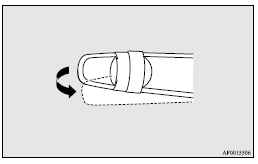
4. The headlamps will come on in the lowbeam setting for about 30 seconds. After the headlamps go off, the headlamps can be turned on again in the low beam setting for about 30 seconds by pulling the turn signal lever towards you within 60 seconds of turning the ignition switch to the “LOCK” position.
To turn on the headlamps again after 60 seconds of turning the ignition switch to the “LOCK” position, repeat the process from step 1.
 Note
Note
► While the coming home light function is operating, perform one of the following
operations to cancel the function.
• Pull the lever towards you.
• Turn the combination headlamps and dipper switch to the
 position.
• Turn the ignition switch to the “ON” position.
► It is possible to modify functions as follows:
• The time that the headlamps remain on can be changed.
• The coming home light function can be deactivated.
For further information, we recommend you to consult a MITSUBISHI MOTORS Authorized
Service Point.
On vehicles equipped with MITSUBISHI Multi-Communication System (MMCS), screen operations
can be used to make the adjustment. Refer to the separate owner’s manual for details.
See also:
Returning to the factory settings
All of the function settings can be returned to their factory settings.
1. Press and hold the multi-information meter switch for about 2 seconds or more
to switch from the setting mode screen to th ...
Engine specifications
Petrol-powered vehicles
Diesel-powered vehicles
...
Parking brake lever stroke
Pull the parking brake lever up to check the number of ”clicks” that the ratchet
makes. One click represents a lever movement of one notch. The lever should move
the specified number of notc ...