
Limited-slip differential (LSD)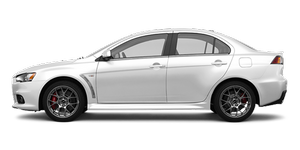
A limited-slip differential (LSD) is applied for the rear wheel differential. The features of this LSD are described below: Just as with a conventional differential, the wheel on one side is allowed to turn at a different speed from the wheel on the other side when the vehicle is cornering. The difference between the LSD and a conventional differential is that if the wheel on one side of the vehicle loses traction, a greater amount of torque is applied to the wheel on the other side to improve traction.
 Note
Note
► Even if there is a difference in the amount of traction the wheels can get, if both of them are spinning, the LSD will not be effective.
 Caution
► Never start the engine while one of the rear wheels is jacked up and the
other in contact with the ground; doing so may cause the vehicle to jump forward.
► Continuously attempting to extract the vehicle from snow, mud, etc. while using
high engine rpm may damage the LSD.
► Using a compact spare wheel will adversely affect the LSD; replace the compact
spare wheel with a standard size wheel as soon as possible.
See also:
Using the MIVEC engine
The MIVEC engine automatically controls valve timing in accordance with driving
conditions for maximum engine performance.
Note
► To protect the engine, the high-speed mode may not be selec ...
Passenger’s switches
The passenger’s switches can be used to operate the corresponding passenger’s
door windows.
Press the switch down to open the window, and pull up the switch to close it.
If the switch is ful ...
Safety
A 2013 base Lancer with front-wheel drive scores an overall four out of five
stars in National Highway Traffic Safety Administration crash tests. The Lancer
receives the Insurance Institute for Hi ...