
How the supplemental restraint system works
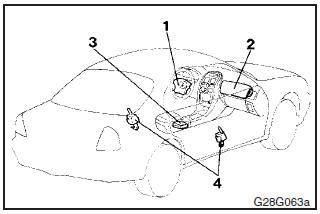
The SRS includes the following components:
1- Air bag module (Driver)
2- Air bag module (Passenger)
3- Air bag control
unit (including the front impact sensor)
4- Seat belt pre-tensioner
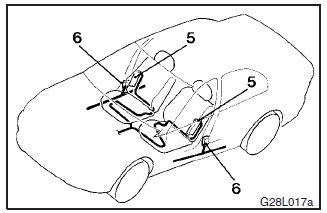
5- Side air bag module*
6- Side impact sensor*
The air bags will operate only when the ignition switch is in the “ON” or “START” position.
When the impact sensors detect an impact of sufficient frontal or side force, an automated circuit ignites materials in the inflator to generate gas and inflate the air bags. The air bags deployment produces a sudden, loud noise, and releases some smoke and powder, but these conditions are not injurious, and do not indicate a fire in the vehicle. People with respiratory problems may feel some temporary irritation from chemicals used to produce the deployment; open the windows after air bag deployment, if safe to do so.
The air bags deflate very rapidly after deployment, so there is little danger of obscured vision.
The time required from the sensors detecting an impact to deflation of the air bags after deployment is shorter than a blink of an eye.
CAUTION
Air bags are inflated at an extremely rapid speed. In certain situations, contact with inflating air bags can result in light cuts, bruises, and the like.
See also:
Parking brake lever stroke
Pull the parking brake lever up to check the number of ”clicks” that the ratchet
makes. One click represents a lever movement of one notch. The lever should move
the specified number of notc ...
Maximum towable weight with brake and maximum trailer-nose weight
Never exceed the maximum towable weight with brake and the maximum trailer-nose
weight as listed in the specifications. (Refer to pages from 10–6 to 10–9)
If you tow a trailer at an altitude of ...
Type 1
The key fits all locks.
1- Electronic immobilizer key
2- Key number tag ...