
Twin Clutch SST control mode
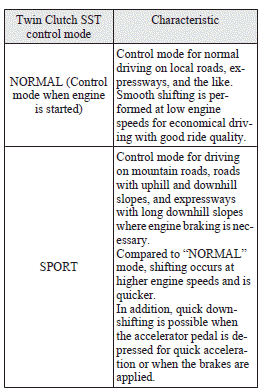
Select the control mode from the following two types to suit the driving conditions.
 Note
Note
► When continuously driving on closed circuit tracks or at other locations where
the engine is operated at high speeds and under a heavy load, the Twin Clutch SST
fluid temperature will have a tendency to rise.
In this case, if the temperature rises too high, the
 warning display will appear on the
information screen in the multi-information display to alert the driver.
warning display will appear on the
information screen in the multi-information display to alert the driver.
If the warning display appears, be
sure to refer to “Warning display” and follow the appropriate measures.
► The Twin Clutch SST control mode can be selected both when “D” range operation
is selected and when manual shifting is selected.
► If you select “SPORT” mode while the engine is cold, the transmission may shift
up at different speeds compared to that when the engine is warm.
This is simply the operation of the control system to warm the engine quickly. It
does not indicate a malfunction.
► For slippery road surfaces, such as roads with accumulated snow, “NORMAL” mode
is recommended for smooth shifting at low engine speeds.
See also:
Tyres
Warning
► Driving with tyres that are worn, damaged or improperly inflated can lead
to a loss of control or blow out of the tyres which can result in a collision with
serious or fatal inju ...
Reversing sensor system operation indication lamp
In case there is a malfunction in the reversing sensor system, the reversing
sensor system operation indication lamp will blink and the warning buzzer will sound
for approximately 5 seconds. Even ...
Function setting screen
The “Display language”, “Temperature unit”, “Fuel consumption unit”, and “Average
fuel consumption and speed reset method” etc. settings can be modified as desired.
Refer to “Ch ...